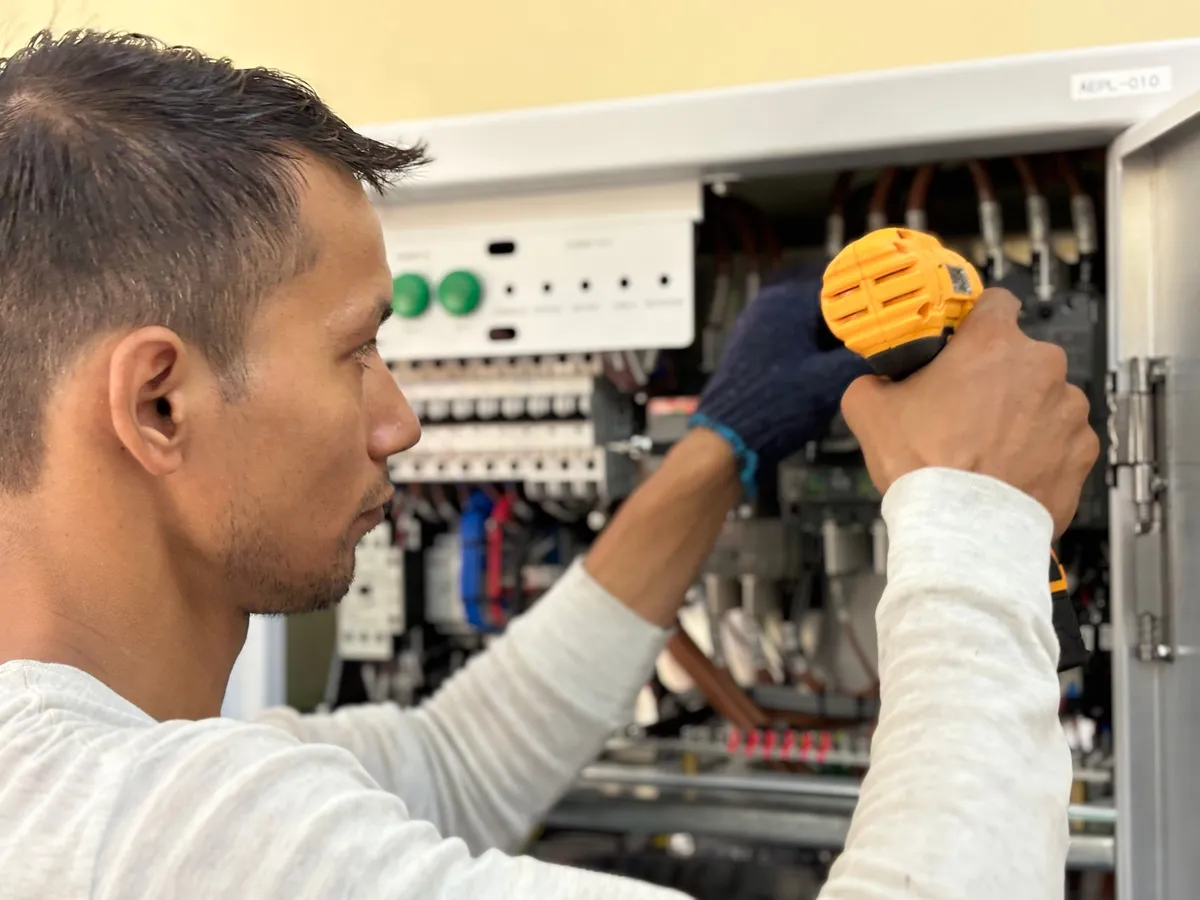
Electrical equipment is rated, tested, and priced for an assumed world of moderate temperatures. Pahrump is not that world. Summer afternoons north of 110°F, panel surfaces on sun-struck walls far hotter than that, forty- degree day-night swings, UV that destroys plastics, and — the real killer — the largest electrical load of the year arriving at the exact moment heat has eroded every component’s margins.
Understanding this isn’t academic. It explains the valley’s most common electrical complaints — summer breaker trips, flickering during compressor starts, panels that fail in July — and it points at the cheap preventive habits that keep them from becoming emergencies. We’re an independent referral service, not an electrician, so treat this as the briefing we’d want any Pahrump homeowner to have before hiring anyone.
The unfair physics of summer
Start with the collision at the heart of it: breakers carry less current in heat, exactly when your house asks for more.
A circuit breaker is a thermal device — it trips by heating an internal element. Its ratings assume a moderate ambient temperature around the panel. Put that breaker in a sealed Pahrump garage or a panel on a west-facing wall in July, and it starts from hot: it will trip at less current than its label suggests. Meanwhile, the air conditioner — the biggest load in almost every valley home — is running flat-out, and a compressor pushing against triple-digit condenser temperatures draws more current than the same unit on a mild spring day.
So the margin shrinks from both ends. A circuit that carried its load with room to spare all winter can nuisance-trip through the hot afternoons — not because the breaker “went bad,” but because summer removed the slack. If that’s your symptom, the breaker troubleshooting guide walks the full diagnosis; if the trips cluster around the AC and other large loads running together, the deeper story is often service capacity, covered in signs you need a panel upgrade.
What heat does to the panel itself
The valley’s housing mostly went up in the 1990s–2005 boom, which means thousands of Pahrump panels are now 20 to 35 years old — and desert years are long years for service equipment:
- Connections loosen. Every day-night temperature swing expands and contracts every terminal, lug, and splice. Over decades, connections work loose; loose connections have resistance; resistance makes heat; heat loosens them further. This feedback loop is how a tight, quiet panel becomes one with warm breakers and a faint buzz — and it’s why those two symptoms are on every “call now” list, including ours on the emergency electrician page.
- Sun exposure ages the service entrance. Panels, meter bases, masts, and weatherheads on south- and west-facing walls take decades of UV and surface temperatures well beyond ambient. Insulation embrittles, seals weather, and the service-entrance repairs that surprise homeowners during panel quotes usually trace back to sun.
- Aluminum oxidizes. Corrosion on lugs and aluminum conductors adds resistance at exactly the points carrying the whole service.
None of this means every older panel is failing. It means desert panels deserve inspection on a schedule, and that heat-related symptoms — warm breaker faces, buzzing, flicker during compressor starts, breakers that trip only in summer — should be read as data, not annoyance. When a panel is genuinely done, most 200A replacements run $1,300–$2,500 in 2026; the panel upgrade cost guide has the full breakdown.
Outdoors: UV, monsoons, and everything with a plastic jacket
Outside the panel, the desert works on anything exposed:
- UV embrittlement. Cord jackets turn chalky and crack; outlet in-use covers fail at the hinge; zip ties and conduit fittings crumble. A cracked cover over a live outdoor outlet is a moisture path waiting for monsoon season.
- Monsoon moisture. July–September storms find every weathered seal. GFCIs that trip in humid weather are often doing exactly their job — detecting leakage through a compromised box or fitting. Test every outdoor and garage GFCI twice a year with the button; replace covers that no longer close.
- Lightning and switching surges. Monsoon storms bring real surge events. A panel-mounted whole-house surge protector is cheap insurance for the AC, well pump, and everything with a circuit board — and adding one during any other panel work is the cheapest time to do it.
For homes with standby generators — increasingly common here, where a summer outage means a house at 110°F — heat cuts both ways: the generator protects you from outage heat, and desert conditions punish the generator. Keep the maintenance schedule honest ($200–$650/yr is the typical 2026 maintenance range) and see the generator installation page for sizing and transfer-switch basics, or the generator installation cost guide for 2026 installed prices.
Wells, swamp coolers, and the loads mild climates don’t have
Two more fixtures of valley life put desert-specific stress on electrical systems:
- Well pumps. Much of Pahrump is on private wells, which means a motor load most American homes don’t have — often on a long circuit run to the wellhead, in full sun. Summer is peak water season (irrigation, evaporative cooling, livestock), so the pump’s duty cycle rises with the temperature just like the AC’s. A pump circuit that trips in summer, or well-pump flicker when the pump starts, follows the same diagnostic logic as the AC symptoms above — with the added possibility that the pump itself, not the wiring, is the failing component drawing hard. Getting the electrical side ruled in or out first is usually cheaper than starting with a well contractor.
- Evaporative coolers. Swamp coolers earn their keep in early summer, but electrically they’re a double stress: a motor load plus water pumped through a rooftop or window unit — moisture, minerals, and connections in close company. Corroded terminals and moisture-tripped GFCIs on cooler circuits are a routine local finding. If the cooler circuit trips when the season starts, have the circuit and its connections checked before condemning the cooler.
Both share the desert-heat moral: motors work hardest exactly when the electrical system has the least margin, so summer is when marginal circuits confess.
Manufactured homes feel all of it first
A large share of Pahrump’s housing is manufactured, and the desert-heat story lands harder there: exterior service equipment with full sun exposure, long feeder runs, tighter chase spaces that trap heat around wiring, and HUD-code details that differ from site-built homes. The same symptoms — summer tripping, flicker, warm equipment — deserve the same attention sooner. Our mobile home electrical page covers what’s different and how to make sure a contractor quotes it knowingly.
The before-summer checklist
The cheap version of desert-proofing is a spring ritual. In April or May, before the first 100-degree stretch:
- Touch-test the panel front (the closed door, not the interior) on a warm afternoon with the AC running. Warm-to-hot? Book an electrician.
- Listen at the panel for buzz or crackle. Silence is the only correct sound.
- Test every GFCI — kitchen, baths, garage, outdoors — with the test button.
- Look at outdoor covers and cords for UV cracking; replace what’s brittle.
- Note last summer’s pattern. Any circuit that tripped in the heat last year will do it again this year, sooner — get it diagnosed in the off-season, when scheduling is easy and nobody’s paying emergency rates.
- Consider the pre-season service call. A $100–$200 visit (typically covering the first hour, with further work at journeyman rates of $50–$100/hr) to check lugs, breakers, and the AC circuit is the best money-to-prevention ratio in this guide. Ranges are 2026 national figures (HomeGuide cost datasets, reviewed July 2026); local quotes vary — the Pahrump electrician cost guide has the complete picture.
And know the summer emergency line: burning smells, a hot panel, repeated main trips, or a failed AC circuit during extreme heat are call-now problems — after-hours response runs $150–$200/hr, and in a Pahrump July it’s worth every dollar. One free triage first, though: if the whole neighborhood is dark, that’s a Valley Electric Association outage — check outages.vea.coop or call VEA at (775) 727-5312 before paying anyone. VEA (the valley’s member-owned co-op — not NV Energy) owns everything up to your meter.
The bottom line
The desert doesn’t cause unique electrical failures — it accelerates the ordinary ones and schedules them for the worst possible week. Respect the two symptoms that never wait (heat and sound at the panel), run the spring checklist, and treat summer-only breaker trips as the early warning they are.
When a check does turn something up, we can connect you with an independent Pahrump-area licensed electrical contractor for a free quote — tell us what you found through our contact form. We don’t perform electrical work ourselves; verify any contractor’s Nevada State Contractors Board (C-2) license at nvcontractorsboard.com before hiring, and get the fix in writing.
Last reviewed August 2026. Pahrump Electrician is a free, independent referral service — we connect Pahrump-area homeowners with a licensed local electrical contractor who calls you back and does the work. We're the connector, not the crew.